Marco Carrera and Adele Carrera's father-daughter relationship
The HummingbirdMarco Carrera and Adele’s father-daughter relationship begins with an extraordinary disclosure: Adele tells him that a thread runs from her back to the nearest wall, and Marco recognizes in her explanation a closeness between them that he had not previously understood. He reshapes his daily life around his daughter, and her invisible thread disappears as their bond deepens. After Adele’s death, his care for her child becomes a continuation of the responsibility and tenderness he had shared with Adele.
The thread and the beginning of their bond
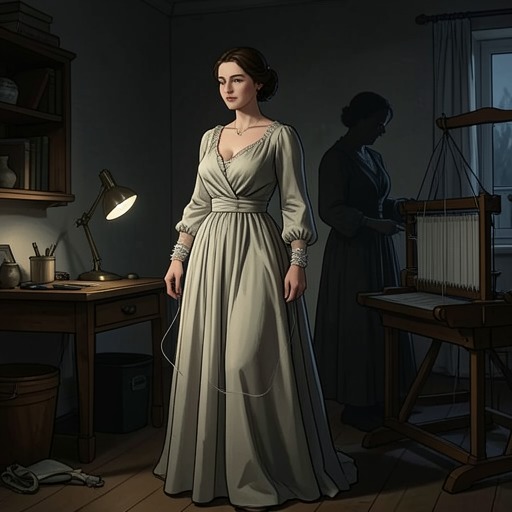
When Adele is about three, she tells Marco about the thread during breakfast in the kitchen of their house in Bolgheri. She explains that it attaches her to the nearest wall, that other people cannot see it, and that she must be careful not to let anyone become caught in it. If someone walks behind her, she has to move around that person to free them. Asked whether everyone has such a thread, Adele says that only she does; what seems strange to her is that other people do not have one.
The conversation turns on an ordinary fact of their shared life: Adele says that her parents do not walk behind her. When Marco realizes that he never passes behind his daughter, he feels a shiver and understands that their relationship has begun in this moment. The narration links Adele’s account to a first, apparently independent decision in her life, while presenting the thread as a way her experience expresses a bond she cannot otherwise explain.
Marco also has a sudden, frightening recognition, which the narrative associates with his sister Irene. He immediately represses what he has seen and continues as though nothing happened. The connection between Adele’s perception and Marco’s response remains buried; even after events unfold in a way he had briefly anticipated, the vision does not return to him. His closeness to Adele is thus established alongside an act of forgetting that shapes what he can acknowledge about their family.
Care, interpretation, and change
Adele’s thread affects her life outside the home. During a school visit to a farm in Maccarese, she refuses to get off the bus because the number of animals makes the thread dangerous. Marina understands the reason when she collects her, and later tells Marco; both parents are moved and play along with Adele’s account. At this stage, they respond to her experience without treating it as a crisis.
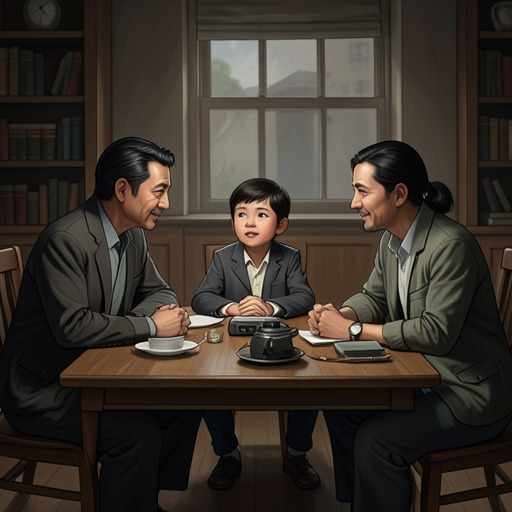
That approach becomes harder to sustain after a move and a change of school. Adele is found crying alone, and her parents disagree about why she is unhappy: Marco sees the move as an unnecessary disruption, while Marina asks whether the thread is involved. The school director calls the thread a perceptual disturbance and urges them to consult a specialist. Dr. Nocetti, whom his young patients call the Magician Manfrotto, offers a relational interpretation: the thread binds Adele not to walls but to her father, through a close and exclusive attachment formed, he believes, because she fears losing him.
The therapist recommends that Marco spend substantially more time with Adele, ideally more than Marina does. Marco accepts the recommendation and changes the organization of family life. He takes on the drives to the school beyond Tor Carbone, attends to Adele’s everyday needs, cuts back on photography, tennis, and poker, and reduces his work as an ophthalmologist, including giving up conferences and competitions. He does not experience these changes simply as a sacrifice: to his surprise, he feels better. The redistribution of care also unsettles the parents’ established roles and leaves Marina with a sudden expanse of unstructured time.
Taking responsibility for Adele’s daily care gives Marco greater say in decisions about her life. In January, without first discussing it with Marina, he enrolls Adele in fencing. The activity gives her a world of masks, flexible swords, and fast exchanges; soon she stops avoiding people who pass behind her, talking about the thread, resisting school, and crying alone there. The thread disappears in everyday life. Nocetti and Marina nevertheless attribute its disappearance to Marco’s increased presence, while Marco sees the timing of fencing as evidence of its value. The competing explanations leave the change meaningful without settling what caused it.
Separation, death, and continuing care
Marco and Marina’s marriage eventually breaks apart. Marina leaves for Germany with Adele and another partner, and Adele returns to Italy the following year to live with her father. This return restores their shared life after a period of separation, but it does not protect them from later loss: Adele dies, and the father-daughter relationship can no longer continue through ordinary care.
In the aftermath, Marco and Marina begin seeing one another again for the sake of their granddaughter. The tragedy changes the terms of their estrangement. Rather than renewing their former marriage, their meetings give them a common responsibility and a connection shaped by bereavement. Marco’s visits to Marina’s clinic in Germany, with the child, extend his role as a father into his care for Adele’s daughter.
That continuation has particular weight because the child’s care had once reorganized Marco’s own life. His earlier decision to place Adele’s needs at the center of his time transformed his relationship with her; after Adele’s death, the responsibility passes to him in a new form. The relationship is therefore marked both by a beginning—the thread that made their closeness visible—and by an inheritance of care that survives the daughter who first drew him into it.